
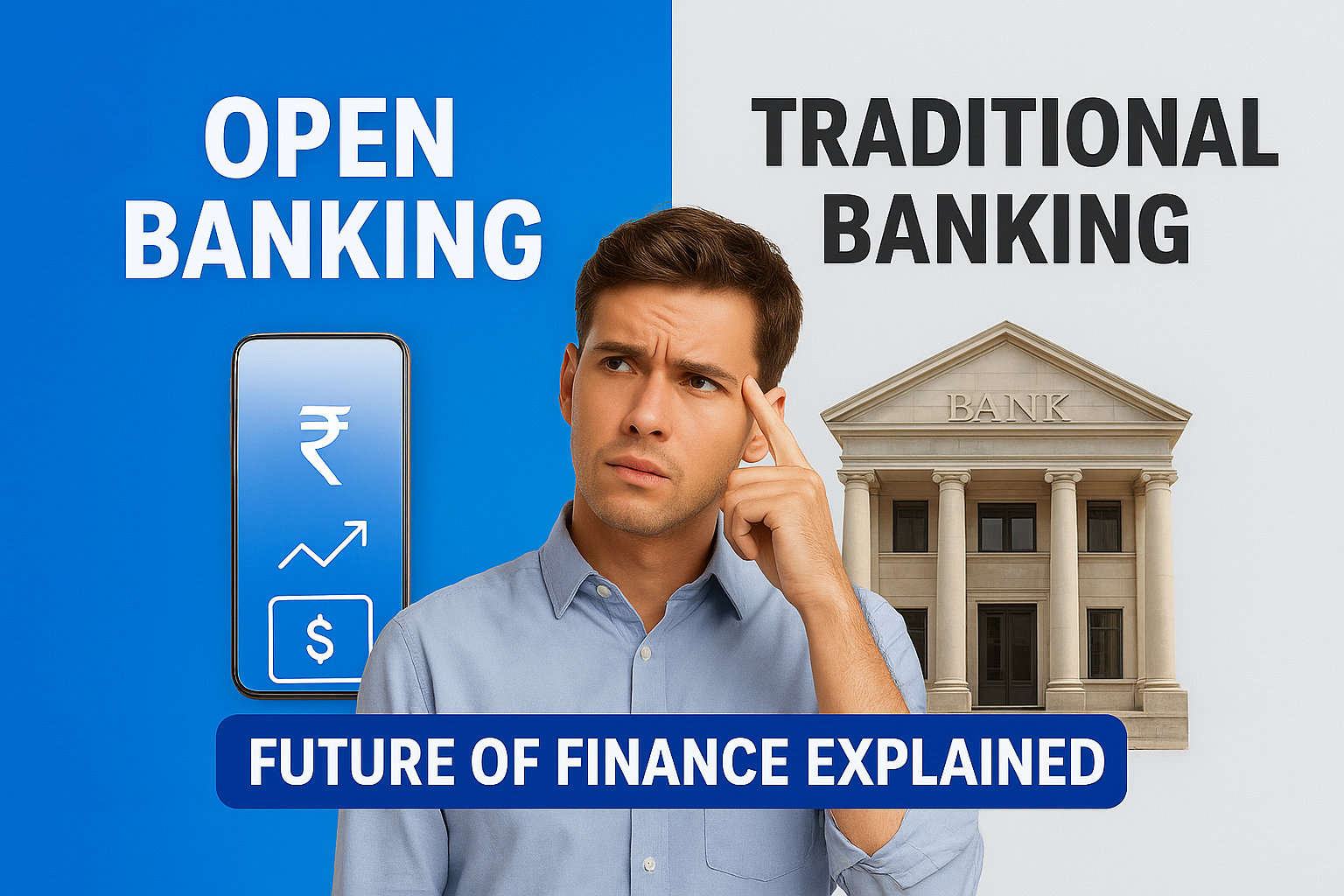
Open Banking vs Traditional Banking: Differences, Benefits & More
Introduction
Banking is undergoing a massive transformation. While traditional banks have long relied on closed systems and manual services, open banking is reshaping the financial ecosystem with secure data sharing, innovation, and transparency. By allowing customers to decide who can access their data, open banking creates smarter and more personalized financial experiences that traditional banks struggle to provide.
Definition of Open Banking
It is a regulated system that allows third-party providers—such as fintechs, budgeting apps, and lending platforms—to access banking data with customer consent. This access is powered by secure APIs, ensuring data safety while enabling innovation. Customers remain in full control, deciding when and with whom to share their financial information.
Definition of Traditional Banking
Traditional banking operates on a closed model where the bank controls all customer data and services. There is no external integration, which limits product variety and digital innovation. Customers usually rely on branch visits or manual processes, making banking slower and less flexible compared to open banking.
Role of APIs in Open Banking
The real power of open banking lies in APIs (Application Programming Interfaces). These secure connections allow banks and third-party providers to share data for payments, account access, and service integration. APIs eliminate risky practices like screen scraping and instead offer safe, automated, and efficient solutions that enhance customer experience.
Customer Control and Transparency
A major advantage of open banking is customer empowerment. Users can approve or reject requests for data sharing at any time, giving them full control over their personal financial information. This transparency builds greater trust and ensures people truly own their banking data.
Account Aggregation and Payment Innovation
Open banking makes financial management simpler by allowing multiple bank accounts to be viewed on a single dashboard. This feature is especially helpful for personal finance apps and budgeting tools. Payment initiation is another area where open banking shines. Customers can pay directly from their bank accounts without needing cards or intermediaries, resulting in lower fees and faster transfers—something traditional banks still rely on third parties for.
Faster Credit Decisions
“Thanks to open banking and the RBI account aggregator framework, lenders in India can now make faster, fairer credit decisions. This not only speeds up personal loans but also supports SMEs in accessing business loan approval in India more efficiently.”
Personalization in Financial Services
Unlike traditional banks that provide one-size-fits-all solutions, open banking allows services to be personalized based on spending behavior and financial patterns. Customers receive intelligent product recommendations, real-time alerts, and advice tailored to their needs—making financial management more relevant and engaging.
Benefits for SMEs
Small and medium-sized enterprises (SMEs) benefit immensely from open banking. Automated accounting, easier access to credit, simplified payroll, and smoother vendor payments improve overall cash flow management. Traditional banking, on the other hand, often burdens SMEs with slow approvals and manual processes.

Security, Regulation, and Trust
Security is often a concern, but open banking operates under strict regulatory frameworks such as PSD2 in Europe and RBI’s Account Aggregator (AA) framework in India. It uses advanced authentication methods like OAuth and biometrics, along with end-to-end encryption. Compared to legacy password-based systems in traditional banking, open banking is far more secure.
Real-Time Data and Innovation
Another edge of open banking is real-time access to financial data. Customers can instantly view their balances and transaction history, which helps in fraud detection, cash tracking, and smarter financial actions. This real-time approach fuels innovation as fintechs and banks collaborate to launch new services faster, while traditional systems lag due to outdated digital infrastructure.
Future of Open Banking
The future of open banking is set to expand beyond bank accounts into open finance, covering areas like insurance, pensions, and investments. It also promises greater financial inclusion for unbanked and underbanked populations, along with seamless integration of financial services into everyday apps. Traditional banks are expected to evolve into API-driven models to stay relevant.
Conclusion
Open banking gives customers control over their financial data and enables smarter, faster, and more personalized services. Traditional banking, in contrast, remains slow, limited, and less collaborative. With APIs making financial data interoperable and actionable, both individuals and businesses stand to gain from automation, efficiency, and real-time insights. Despite challenges like data privacy concerns and varying compliance standards, open banking is undoubtedly the future of modern finance.
FAQs
1. Is open banking safe?
Yes. It uses strong authentication, encryption, and regulated third-party access. Data is only shared with customer consent.
2. Can I control who accesses my data?
Absolutely. Customers can grant or revoke permissions anytime.
3. Do all banks support open banking?
Many banks worldwide have adopted it, and in some regions, participation is mandated by regulation.
4. What apps use open banking?
Budgeting apps, loan providers, accounting tools, and payment apps benefit the most from real-time banking data.
5. Can open banking help small businesses?
Yes, it automates financial processes, simplifies credit access, and reduces manual workload for SMEs.
6. How does open banking improve loan approvals?
By giving lenders real-time access to verified financial data, making credit decisions faster and fairer.
7. What if a third-party misuses my data?
Regulations ensure strict penalties, and customers can revoke access instantly.
8. What’s the future scope of open banking?
It will expand into insurance, investments, pensions, and integrate seamlessly into personal and business apps.